
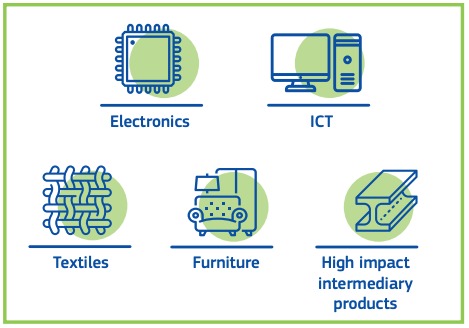
The European Union has launched its Circular Economy Action Plan this March, with a set of improvement measures targeted for the Textiles sector. We at Regenerate have made sure to update ourselves with its content. Textiles was elected as a priority value chain along with electronics, ICT, furniture, and high impact intermediary products – such as steel, cement, and chemicals.
The plan announces the implementation of several key actions and strategies to accelerate the sector’s transition towards a “regenerative growth model” and double the circular material use rate, in the coming decade.
Why do we think fashion can be the perfect business case for this transition?
First, because a global movement for the sector’s sustainable transformation has already begun and, secondly, due to fashion’s natural vocation to innovate in terms of design, communicate new ideas and get close to its customers.
One of the main measures showcased in the plan is the new “Sustainable Product Framework” that will transform eco-design guidelines for product development, into legislative requirements (reaching beyond the energy sector, as it has been until now). Among the sustainable principles associated with clothing and textiles, is the adoption of secondary raw materials, and the empowerment of business and private consumers to choose sustainable textiles.
Despite the slow fashion market which is already characterized by reused and recycled textiles usage, major brands such as Patagonia, who launched its collection of up-cycled garments, along with a short film explaining all the process, and Adidas with its 100% recycled shoes which became global news – are leading the way in showing retail that these solutions can become trends.
The education and information disclosure movement among the sector also became huge in the past three years, with the help of activism initiatives like Fashion Revolution, documentaries like River Blue, and Sweat Shop: Deadly Fashion, along with the growth of event platforms like Neonyt Berlin, and circular fashion consultancy agencies like us! All of them contribute to educating businesses and consumers on subjects like conscious consumption and the importance of having business strategies oriented towards positive impact.
The “Sustainable Product Framework” will also bring about tackling the presence of hazardous chemicals throughout the textile production chain, something that is being worked on worldwide by small and big brands choosing to use organic fibers, and dyeing and finishing textiles in certified facilities, following ZDHC’s guidelines.
Also, the ability that fashion marketing has to communicate with customers through newsletters, social media inboxes, and even through message apps, will be a valuable tool to stimulate clients to access repair services, set take-back schemes that support reuse and textile recycling, and benefit routine logistics in product-as-service models, such as weekly deliveries to shared wardrobes.
All the measures and requirements will be specified at the launch of the Sustainable Product Framework, and the Action Plan also announces the release of a EU Strategy for Textiles. We’re enthusiastic about fashion becoming a role model on this plan, and that the European sector can inspire governments and fashion companies throughout the world, to provoke change!
To read the full action plan visit: https://ec.europa.eu/environment/circular-economy/pdf/new_circular_economy_action_plan.pdf




 REGENERATE Fashion